MUSIC / A KPOP MAGAZINE INTERVIEW
Aphrajay: From Growing Up on K-Pop to Finding Her Own Sound
In a written interview with KPOP MAGAZINE, the Seattle-area independent pop artist traces a path from Girls’ Generation’s harmonies to making beats in a school library—and explains why she hopes to write and sing demos for K-pop artists.
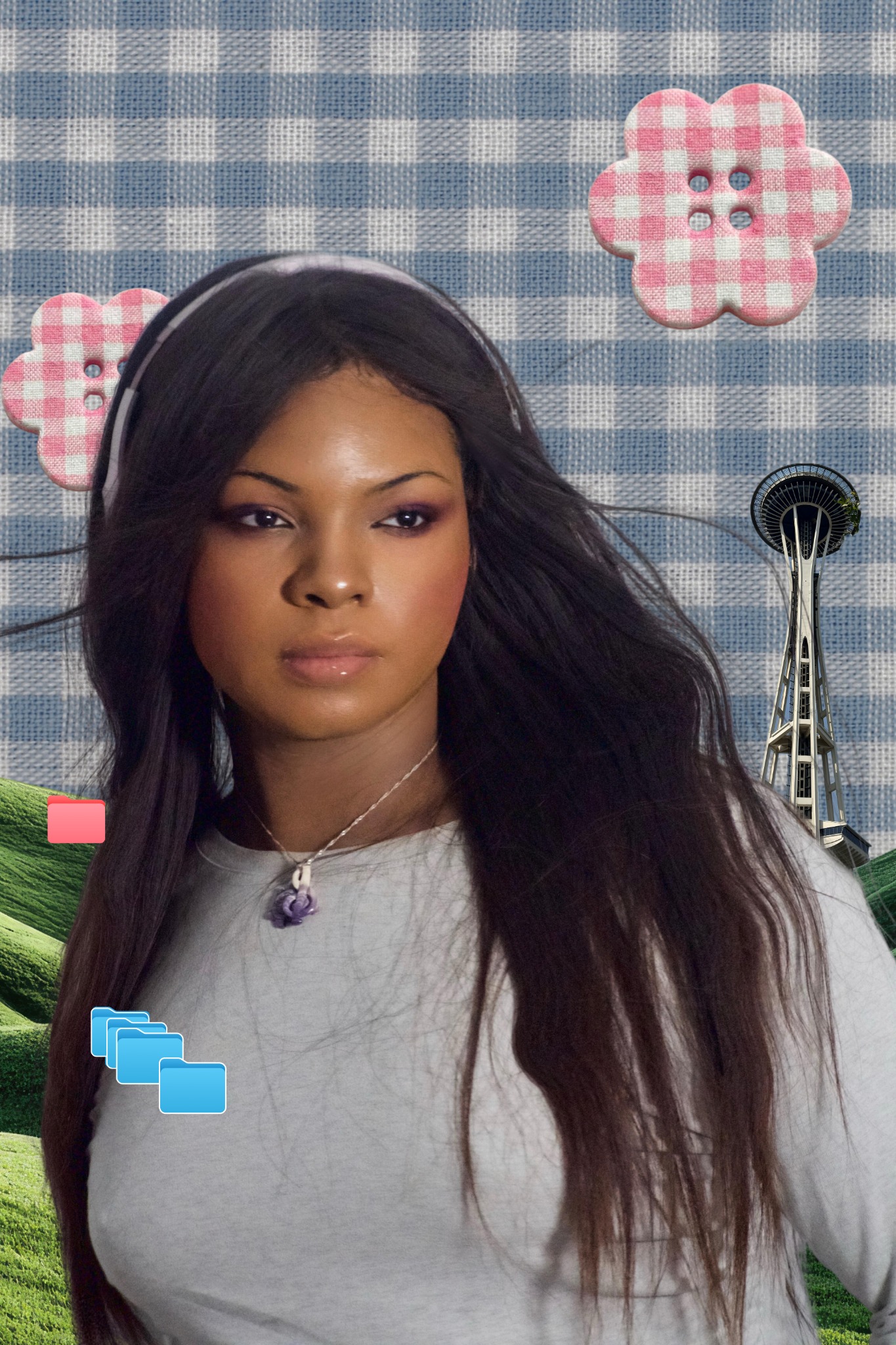
For Aphrajay Appollinaire, listening to K-pop has gradually become a way of thinking about making music. Girls’ Generation offered lessons in harmonies and ad-libs. f(x) connected electronic sound with a distinctive visual identity. TWICE made songs feel like places she could enter. Now, as she prepares her first EP, Manic Princess, she is working out how those experiences might become part of her own sound.
The 23-year-old independent pop artist, based in the Seattle area, has an ambition that extends beyond releasing her own songs. In a written interview with KPOP MAGAZINE, she described writing and singing demos for K-pop artists as one of her career goals. She sometimes imagines helping to shape a new group’s debut, and keeps a YouTube playlist of lesser-known music that might spark ideas for sounds and melodies.
It is an aspiration, rather than an existing K-pop credit. What makes it interesting is the detail behind it: she can explain what she hears in the music she loves, and how she wants to put those lessons to work.
The harmonies, textures and worlds that stayed with her
As a child, Aphrajay returned to Girls’ Generation’s “The Boys” and “Gee.” In her interview responses, she recalled the pleasure of hearing them again, alongside her fascination with the group’s harmonies and ad-libs. That sense of joy is something she hopes to carry into her own songwriting.
With f(x), the attraction was both sonic and visual. She remembers the electronic production and the way the members’ presence in the videos seemed to belong to the same world as the music. Sound and image were working together, rather than simply accompanying one another.
TWICE’s “Like OOH-AHH” and “FANCY” prompt a different description: short films unfolding in her mind. She is drawn to the way each era establishes its own setting. In her own production, she wants a song to contain a landscape and take its listener somewhere.
Her listening continues to expand. Among the acts she mentioned were A2O MAY, TUIDE, KATSEYE and f5ve. They come from different scenes and industry contexts; for Aphrajay, the connection is an interest in where pop might go next. Her hope of working on demos grows out of that curiosity—finding melodies that might eventually belong to another artist’s voice.
From Roblox to Logic Pro
Her first steps in production were deliberately small. Having taught herself to sing by studying vocal techniques on YouTube, she began making music in late 2024. One starting point was a MacBook in a school library, where she tried building a beat inside Roblox.
BandLab came next, followed by Logic Pro. Across those changes, she relied on an instinct she already knew from singing: a feeling for which note should follow the last. Rather than treating production as entirely unfamiliar territory, she tried applying that intuition to instruments and composition.
Other skills preceded the music. Graphic design, illustration, sewing and photography all form part of the preparation she describes. Learning how to make something—and being willing to learn another discipline—has been a recurring part of her approach.
That does not mean she intends to do everything alone. At the time of the interview, she said she had written all the lyrics for Manic Princess herself because she wanted the EP to introduce her capabilities and identity. She also expressed interest in working with other lyricists in the future.
For production, she described the planned final track list as approximately 60 percent solo-produced and 40 percent co-produced. Those figures are her account of the project’s production split, not a statement of song-by-song writing shares. Collaboration helps her reach sounds that require skills she is still developing, including more accomplished guitar playing, and share the work of finishing a release.
A familiar guitar, an unfamiliar synth
The contrast between guitar and synthesizer is central to how Aphrajay describes her music. Guitar-led tracks can feel grounded and relatable. Synthesizers offer something more distant: sounds that suggest another world or somewhere she has not yet been.
In Logic Pro, she uses Ample Guitar M and Kontakt to explore acoustic-guitar textures, while UAD’s Opal Morphing Synth helps her search for less familiar timbres. She sees the relationship between those two kinds of sound as part of the identity she wants to present.
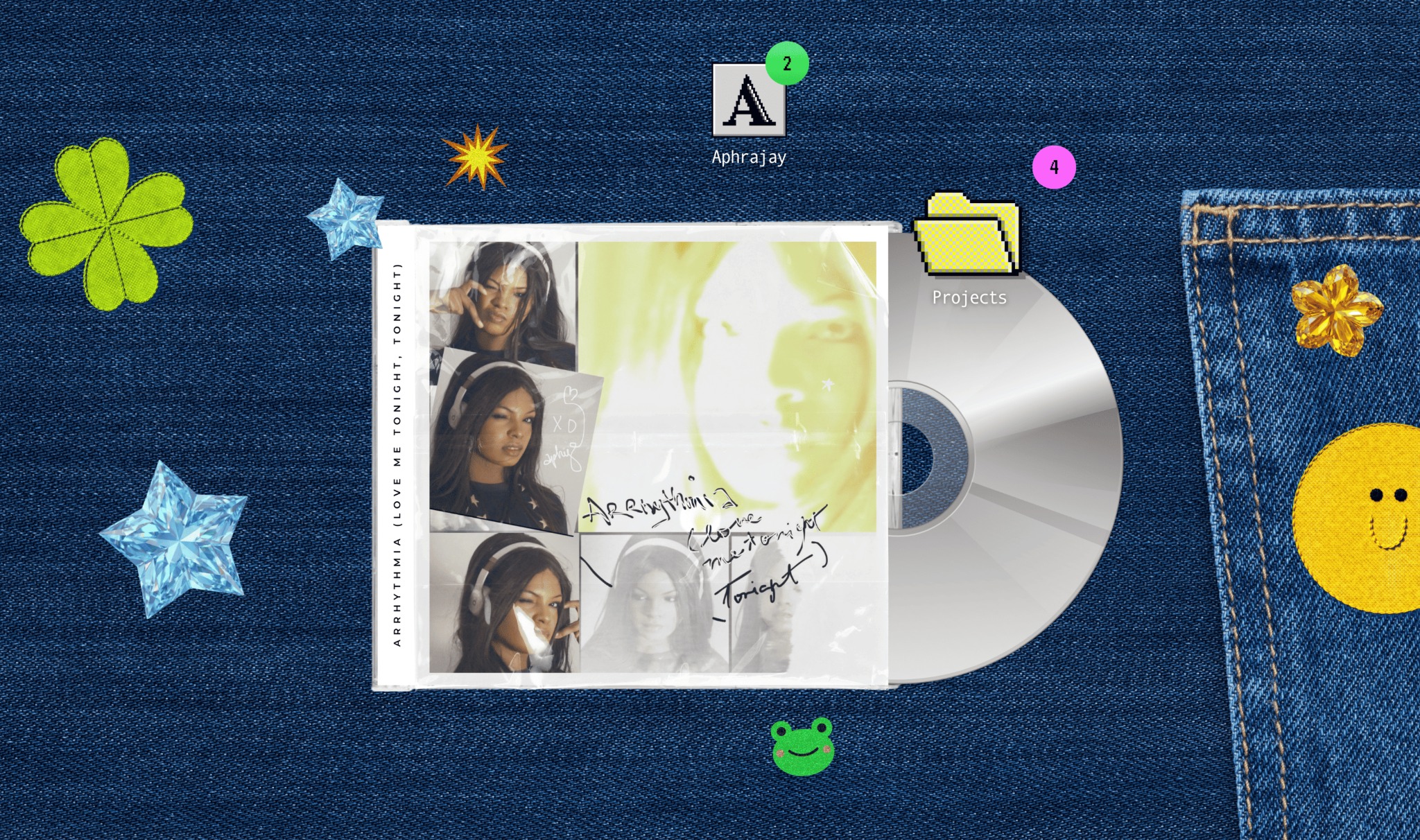
Her debut single, “Arrhythmia (Love Me Tonight, Tonight),” gives listeners an introduction. In the press materials she supplied to KPOP MAGAZINE, Aphrajay describes the song as an expression of feelings a person in love might record privately but struggle to say aloud. The materials describe a chorus held until the end, connecting the arrangement to the wait for an emotional resolution. That is the artist’s account of the single, rather than an assessment of the unreleased EP.
DEBUT SINGLE / OFFICIAL LYRIC VIDEO
Arrhythmia (Love Me Tonight, Tonight)
Making room for other people
In the interview, Aphrajay identified Aiyan as a collaborator on beats for the EP, describing a shared interest in building layered, substantial tracks. She named Zachary Jablow as the project’s mastering engineer. These are distinct roles in the project she was preparing, rather than interchangeable production credits.
The decisions reflect two needs: making a personal introduction and completing a record. Writing all the lyrics herself can coexist with asking other people to contribute skills, perspective and finishing work.
In her supplied press materials, she puts her hopes for the EP this way:
“I’d also like it to reveal where I am now, musically. Maybe that can brew excitement for where I’m headed.”
Aphrajay Appollinaire · artist-supplied press materials
A first EP, and a longer ambition
At the time of her interview responses, Aphrajay was targeting the fourth quarter of 2026 for Manic Princess. She said she had a date in mind but did not disclose it in those responses. The schedule remains an interview-time plan, rather than a confirmed release announcement.
She also described preparing for music videos in the first half of 2027, with budgets, director research, outfits and mood boards among the work ahead. The desire for songs to have their own landscapes extends naturally into that visual planning.
The message she hopes listeners take from the EP is to follow what calls to them. Alongside love, she wants the songs to hold the larger experience of starting something: excitement, uncertainty, the people who join in, and the lessons gathered along the way. She is interested in double meanings and allegory, leaving room for a listener to discover another reading on a later play.
For now, there are two connected ambitions: finishing a record that introduces Aphrajay Appollinaire, and one day helping another artist find a beginning of their own. The harmonies, electronic textures and imagined worlds she grew up hearing have given her something to work toward. Her next task is to make something that carries those interests in a voice listeners can recognize as hers.
This feature draws on KPOP MAGAZINE’s direct written interview with Aphrajay Appollinaire and press materials supplied by the artist. Interview responses are paraphrased from the Korean interview manuscript. The English quotation above comes from the supplied English-language press materials. Future schedules and production details reflect the artist’s account at the time of the interview.
Images supplied directly by Aphrajay Appollinaire. Image source and usage record.