Hanlim vs SOPA: How Two Schools Became K-Pop Institutions
One yellow blazer. One dark uniform. Two schools whose graduation days became part of K-pop’s public calendar. The real distinction goes beyond famous alumni.
For international fans, a Korean school uniform can be almost as recognizable as a stage outfit. A graduation photograph becomes another milestone in an idol’s career: the performer is also a student, finishing a chapter that has unfolded alongside rehearsals, releases and public appearances.
Two names appear repeatedly: the School of Performing Arts Seoul, usually called SOPA, and Hanlim Arts School. Asking which is K-pop’s “real” high school makes a compelling rivalry. It is less useful as an explanation.
These are different institutions with different arts pathways. Famous graduates show their connection to entertainment; they do not establish which school offers the better education or produces more successful artists.
The uniforms became part of the story
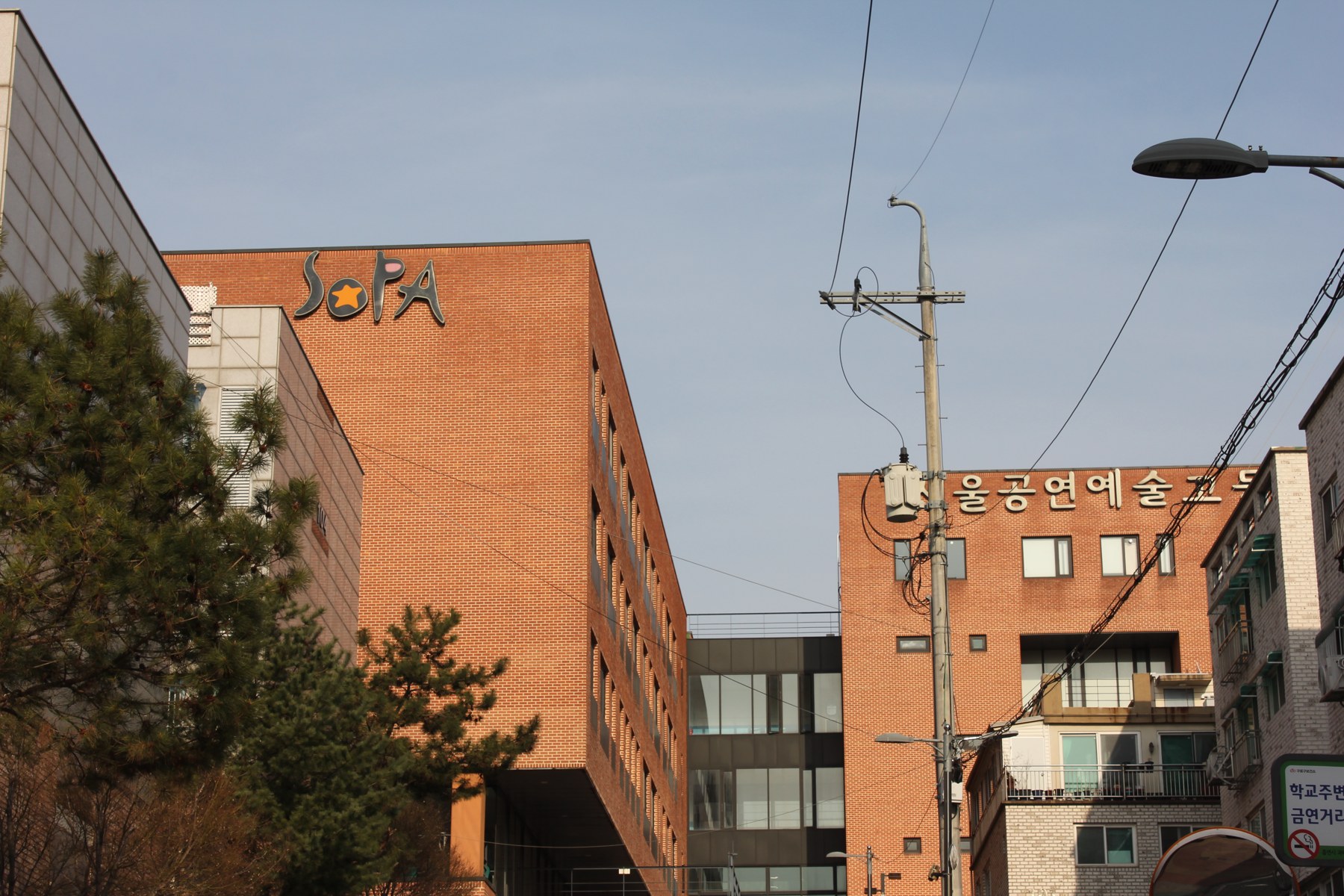
Before comparing departments, consider the images. SOPA’s yellow uniform and Hanlim’s dark blazer make school identity visible in a way that fans can immediately recognize. The photographs below come from different years—not a single graduation season.




This visibility is not limited to the ceremony itself. When IVE’s Wonyoung graduated from SOPA in February 2023, her agency shared a message about the milestone even though she could not attend, as Korea JoongAng Daily reported. School life had become part of a public artist narrative.
Compare the curriculum, not the celebrity count
The schools’ own department lists provide a more concrete starting point than an alumni ranking. SOPA groups its courses into four departments. Hanlim lists six, including distinct pathways for musical theatre and fashion modeling.
SOPA
Departments listed by the school
- Theatre & Film
- Applied Music
- Practical Dance
- Stage Design
Hanlim
Departments listed by the school
- Entertainment
- Musical Theatre
- Practical Dance
- Applied Music
- Fashion Model
- Film Making
The numbers are a map of course organization, not a score. A department name does not tell us class size, teaching quality, admissions difficulty or how much individual support a student receives. Nor do these schools exist only for aspiring idols: the lists encompass performance, screen work, modeling and the visual work behind a stage.
Hanlim’s recent graduates are highly visible
Soompi’s January 8, 2026 graduation report listed Hanlim graduates including ZEROBASEONE’s Han Yujin, IVE’s Leeseo, TWS’s Kyungmin and izna’s Ryu Sarang. That helps explain why the school is so familiar to fans following current groups.
It does not prove that Hanlim has overtaken SOPA. To make that claim responsibly, we would need comparable enrollment and outcome data, a definition of “idol,” and a consistent time period. A collection of recognizable names cannot substitute for that evidence.
SOPA’s association with K-pop is also well established. A 2023 CNA report named Jungkook, Kai and Wonyoung among its alumni while covering a proposed Singapore education partnership. The school’s reputation had become a subject of international reporting in its own right.
A student can also have a working career
The harder question is not which uniform a performer wears. It is how education fits around a career that may already be underway.
During a visit to Hanlim, CNA documented academic classes alongside specialist arts teaching and spoke with student performers about balancing the two. The report described teachers helping students catch up and professional activities being handled through educational arrangements.
That is evidence about the school and students in that report—not a guarantee that every idol receives the same arrangement, or that the two schools have identical attendance rules. Anyone considering enrollment should consult the school’s current requirements directly.
The school pathway
Academic study, specialist coursework, classmates and graduation requirements.
The artist pathway
Agency training, rehearsals, recording, performances and release schedules.
These pathways may overlap in a student’s week, but they are not interchangeable. School enrollment is not an entertainment contract. Graduating from a recognizable institution is not a promise of a debut. The overlap is precisely what makes these schools interesting: education and professional development can happen at the same time without being the same process.
What an alumni list cannot tell you
A successful graduate gives a school visibility. It does not reveal how much of that success came from classroom teaching, agency training, individual practice, family support or opportunities outside school.
There is also a selection problem. Fans encounter the graduates who become famous; they rarely see a complete picture of everyone who studied there. Judging a school only through those stars leaves most of its students out of the story.
Three questions beyond “Who went there?”
An editorial checklist, not an assessment of either school’s admissions or outcomes.
Two institutions, not one winner
For fans, SOPA and Hanlim offer a rare view of idols in an everyday setting. The uniform, classroom and graduation photograph connect an unusually public career to a familiar experience: growing up alongside other students.
For prospective students, the useful comparison is more practical. A course’s content and demands matter more than whether a favorite singer once wore the same blazer.
Neither school needs to win the title of K-pop’s only high school. Together, they show how deeply entertainment and arts education can intersect—and why the story is bigger than a list of famous names.
The education is what deserves a closer look.
Sources and image licenses checked October 2, 2026. Department labels are English renderings of the schools’ published lists. Alumni examples are illustrative, not a ranking or complete graduate census. Original comparison graphics: KPOP MAGAZINE. The photographs retain their original framing; the SOPA campus photograph remains licensed under CC BY-SA 4.0.