N.Flying Keep a Shared Voice Across Still
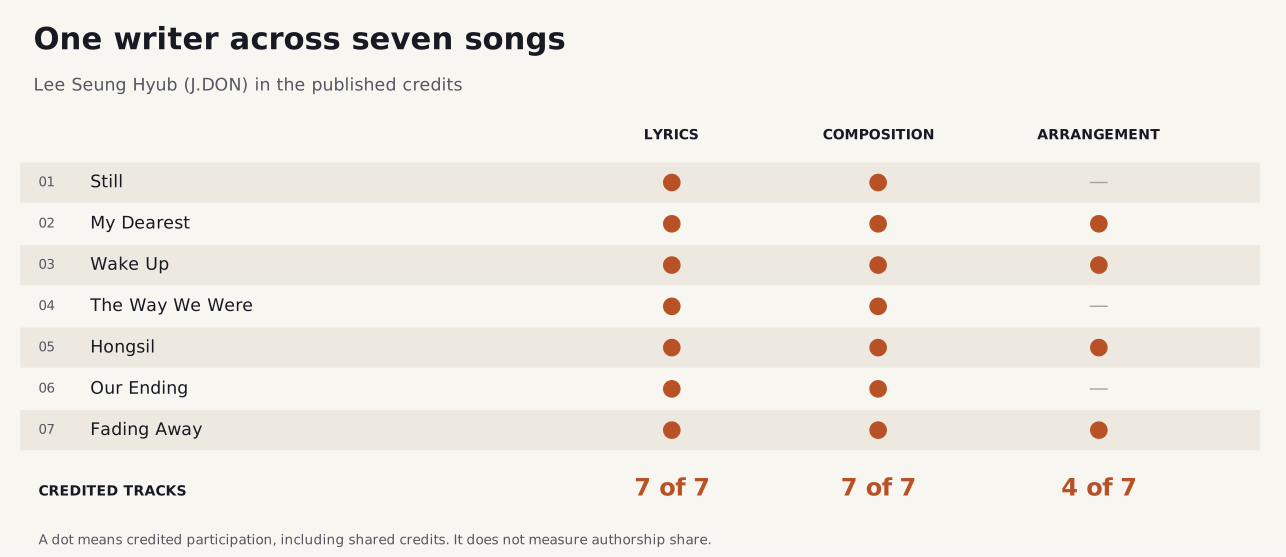
Still keeps Lee Seung Hyub in every lyric and composition line while changing the collaborators and arrangement teams around him.
Watch “Still”
Start with the official title-track video. Then use the credit map below to choose where the album should take you next.
N.Flying / FNC Entertainment official MV · Open on YouTube ↗N.Flying’s Still arrives with a useful question tucked inside its credits: how can an album keep a recognizable writing voice while changing the people around it? Released on October 8, the seven-track mini album gives Lee Seung Hyub, credited as J.DON, a place in every lyric and composition line. The arrangement credits tell a more varied story, with his name appearing on four tracks and different teams shaping the others.
That pattern gives listeners a practical way into the record. Follow the recurring writer, then look at where the collaborators change. Still offers several versions of that relationship within a compact release, from a five-person composition team on the title track to the smaller partnership behind “My Dearest.”
A conversation becomes a song
According to FNC’s album introduction, “Still” began with a real conversation between Lee Seung Hyub and bassist Seo Dong Sung. The company frames its ember imagery around a feeling that can ignite again, connecting the song to the members’ experience of exhaustion and persistence.
The formal credits draw another boundary around that story. Lee and Han Sung Ho share the lyric credit; Lee, Han, Rapid, Kim Ji Hyung and Adam Seuba share composition; Rapid and Kim handle arrangement. Seo’s role in the conversation is part of the documented origin story, while the published songwriting list identifies a different set of contributions. Both details help explain how personal material becomes a collaborative release.
Follow the recurring writer. Then listen for what changes when the collaborators do.
Read the three credit lines
“My Dearest” makes a revealing companion to the title track. Lee is its sole credited lyricist and shares both composition and arrangement with INFX. On “Hongsil,” his partner across composition and arrangement is Kim Subin of AIMING. These smaller teams sit alongside the more distributed title-track credits without breaking Lee’s presence across the album.
Five composers
Lee Seung Hyub · Han Sung Ho · Rapid · Kim Ji Hyung · Adam Seuba
A two-person core
Lee writes the lyrics and shares composition and arrangement with INFX.
Another pair
Lee shares composition and arrangement with Kim Subin of AIMING.
The distinction matters because “participated in every song” can describe different working relationships. A lyric credit concerns the words. Composition recognizes musical authorship. Arrangement names a further layer of shaping the track. One person may appear in all three places, or the roles may be divided among collaborators. A list of names cannot tell us who wrote a particular bar, played each instrument or made the final mix.
Still’s credits therefore support a specific conclusion: Lee is a recurring writer across seven songs, with arrangement involvement on four. They do not establish equal shares, sole ownership or an exact percentage of creative control. The interesting story is the pattern of collaboration itself.
“Wake Up” turns the address inward
“Wake Up” brings another member into that pattern. Yoo Hwe Seung joins Lee on lyrics, and the two share composition and arrangement with JEWNO. His involvement reaches beyond delivering the vocal: all three credit categories identify him as a contributor.
There is also a useful wrinkle in the song’s premise. Its Korean title addresses someone who does not love the narrator, but FNC’s track notes explain the message as a confrontation with a version of oneself that has stopped taking care of itself. Reading it only as a romantic rejection would miss that intended inward turn.
That detail widens the album’s idea of an enduring attachment. Alongside connections between people, the record makes space for the difficult task of returning to yourself. The credits and the stated premise together make “Wake Up” a particularly useful stop for readers exploring the album beyond its title song.
Two entrances to the same album
“Our Ending” reached listeners first, as a pre-release single on September 28, before taking the sixth position on Still. Its official release description emphasizes medium-tempo acoustic pop rock, rhythmic guitar and bass, and added brass. The title track’s rhythm-section-and-guitar emphasis provides a different introduction to the project.
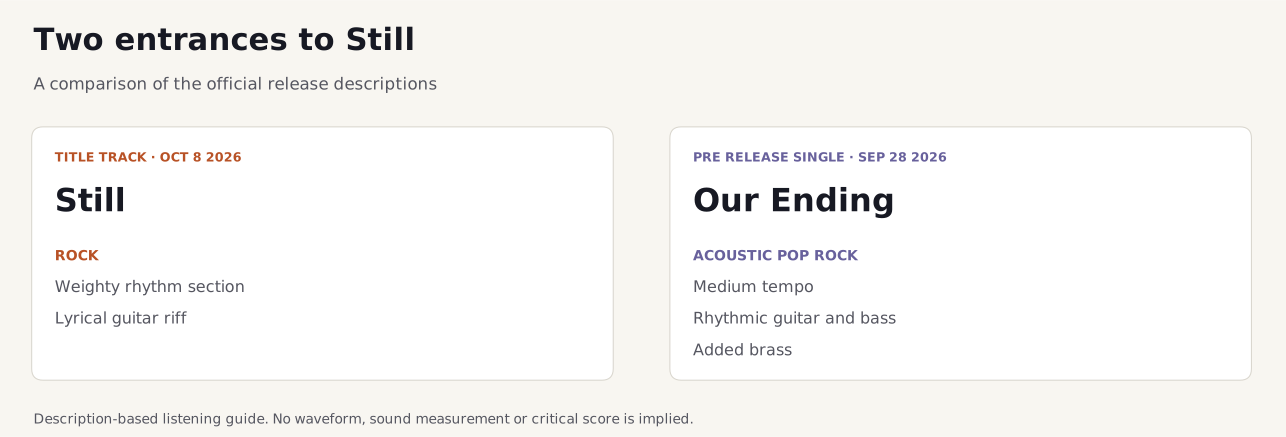
Those descriptions suggest a worthwhile comparison for a first listen: what changes when the brass enters, how does the guitar function in each track, and where do the vocals sit against the band? These are listening questions rather than a verdict about the recordings. They invite attention to the decisions behind the broad label of rock.
Seven songs share a writer. The details show several ways of building around that shared voice.
Sources & editorial notes
- FNC Entertainment: Still album information and full track credits — seven-track sequence, credited roles, song origin and attributed sound descriptions.
- FNC Entertainment release confirmation — October 8 release of the album and official title-track MV.
- N.Flying official “Still” MV — embedded through the official YouTube player; no frame, thumbnail or audio is copied.
- Melon album catalogue — release date, seven-track listing and label-supplied album introduction.
- Bugs album catalogue — secondary host for the published track credits.
Adapted from S.I.Q.’s completed October 9 manuscript, “N.Flying Keep a Shared Voice Across Still,” with duplicate checks, primary-source verification and visual editing by KPOP MAGAZINE. Facts and official links checked October 9, 2026 KST. The 7-of-7 and 4-of-7 counts include shared credits and do not measure ownership percentages. Musical descriptions are attributed to official release notes; interpretation and listening prompts are editorial. No lyrics, promotional photographs, cover art, video stills or screenshots are reproduced.