STUDIO · GEAR GUIDE
Strat vs. Les Paul:
Why the Same Melody Sounds Different
Pickups, scale length, body shape and bridge design: a practical guide to how two familiar electric guitars sound and feel.
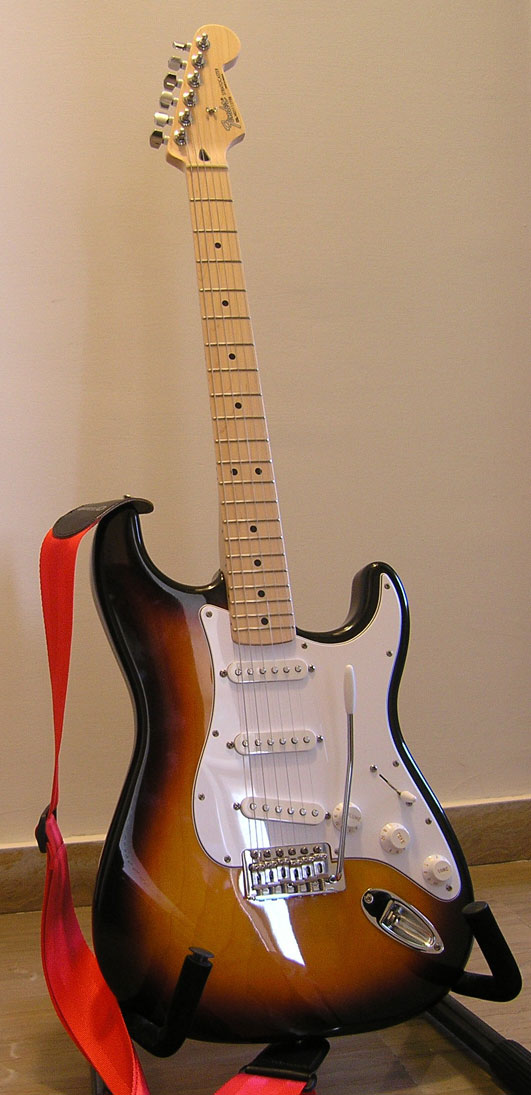
StratocasterFENDER STANDARD · SSS
Les PaulGIBSON CLASSIC · HH
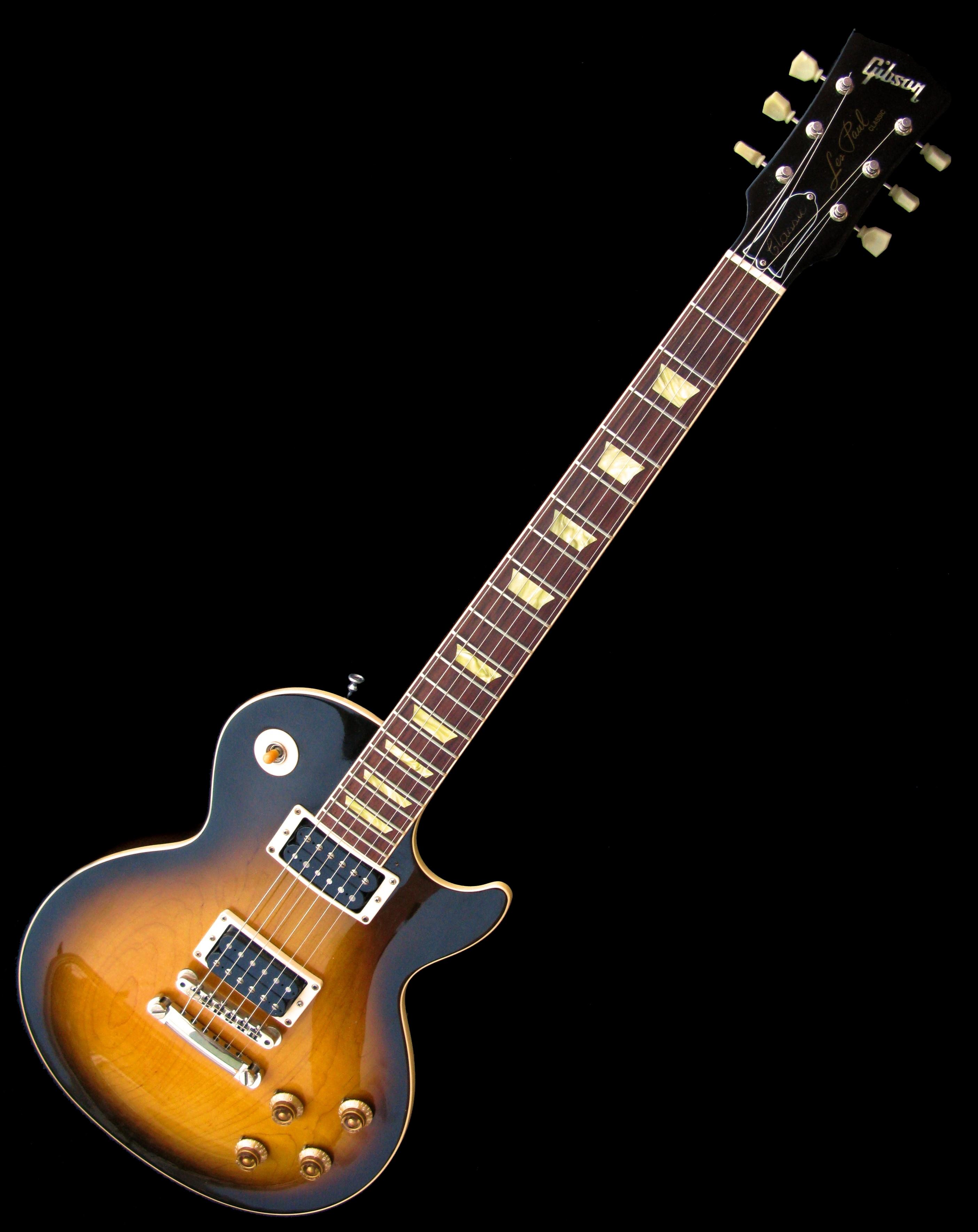
The same chord can make a different impression on a different guitar. A Strat can feel like a pencil drawing a light outline; a Les Paul can feel more like a pen laying down a thicker line. Neither is automatically the better instrument. When choosing your first guitar, separating tone, feel and weight makes the decision much easier.
This guide compares a typical SSS Stratocaster, with three single-coil pickups, and an HH Les Paul, with two humbuckers. HSS Strats, P-90-equipped Les Pauls, noiseless designs and alternative bridges can behave differently. A familiar model name does not guarantee the same specifications.
Start with the pickups
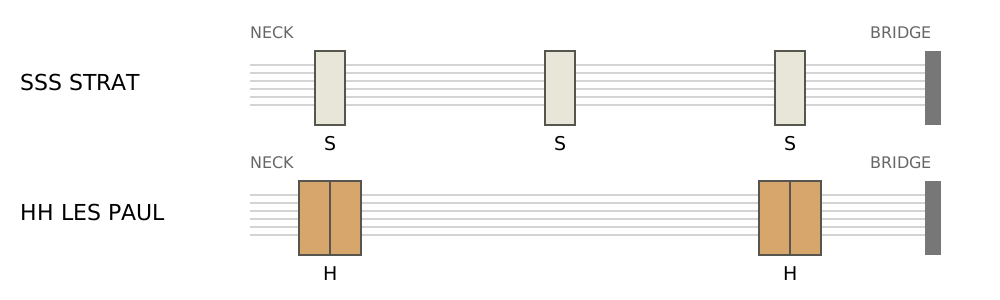
The elongated components beneath the strings are pickups. Magnets and coils turn string vibration into an electrical signal for the amplifier. They work differently from a microphone listening to the air, but thinking of them as the guitar’s entrance to the amp is a useful starting point. On a typical Strat, S means a single-coil pickup; on this kind of Les Paul, H means a humbucker built from two coils. [1], [2]
Single-coils tend to make the high-frequency outline and the beginning of a picked note easy to hear. Short rhythm strokes and individually plucked strings can reveal each note’s character. Depending on the environment, however, they can pick up mains-related hum, which becomes more noticeable with gain. Brightness and definition can be strengths, but some listeners find the bridge pickup’s treble sharp. [1], [2]
A humbucker uses two coils to reduce certain kinds of external hum. Traditional examples often sound thicker and more mid-forward, making it easy to give a riff or melody density. That does not mean every source of noise disappears: amplifier noise, wiring problems, cables and interference still matter. Output and tonal weight also depend on the pickup’s design. [1], [2]
The selector switch changes the picture, too. A Strat commonly uses a five-way switch to choose one pickup or a pair; a Les Paul commonly uses a three-way switch for neck, both or bridge. Within the same guitar, the neck position generally sounds rounder and the bridge more defined. Do not judge the whole instrument from one setting. [3], [4]
Listen to the comparison
In Hamrock Music’s comparison, alternate between the same pickup positions. With clean sounds, listen for the attack and separation between notes. With overdrive, focus on thickness and the texture of the treble.
- Clean / neck · Strat 1:57 / Les Paul 2:28
- Clean / bridge · Strat 2:48 / Les Paul 3:03
- Overdrive / bridge · Strat 5:28 / Les Paul 5:46
This is an example through one equipment setup, not a fully controlled experiment or a result that represents every Strat and Les Paul. The time markers come from the uploader’s description. [7]
The string length you feel
Scale length is the reference length of the vibrating string. A typical Strat is 25.5 inches; a Les Paul is 24.75 inches—a difference of about 1.9 cm. With the same string type and gauge tuned to the same pitch, the longer scale requires more tension. A Strat can therefore feel a little firmer, and a Les Paul a little more yielding. [3], [4], [5]
Bending a string sideways to raise its pitch can make the difference easier to notice. Some players find the Les Paul’s shorter scale comfortable for bends; others like the Strat’s firmer resistance. A shorter scale also brings equivalent frets slightly closer together. That does not mean small hands automatically require a Les Paul.
Ask about string gauge before comparing guitars in a shop. A Strat with lighter strings and a Les Paul with heavier ones may reverse your expectations. String height, neck thickness and shape, and fret condition also affect comfort. Scale length is one condition among several, not a score for how easy a guitar is to play.
Curves, balance and weight
The Strat’s contours—shaped areas where the forearm and torso meet the body—are a defining feature. They can make the instrument feel natural against you during long seated practice or standing performance. The double cutaway also helps access to higher frets, although the neck joint’s shape matters as well. [3]
A traditional Les Paul has a single cutaway and a carved top. Its edge meets the forearm differently. Many examples are substantial, but not every Les Paul is heavier than every Strat. Some models use chambering or other weight-relief designs, and individual instruments of the same model vary.
Put on a strap and stand for a while if you can. Notice your shoulder, the angle of the neck and whether your picking arm tenses when you sit down. A weight specification is useful; balance against your own body is something you need to feel.
A moving bridge, a different routine
Many Strats have a bridge that lets a vibrato arm change the strings’ pitch. It is commonly called a tremolo system, although the main change here is pitch rather than loudness. A gentle dip at the end of a chord or a ripple through a melody offers a different kind of expression from finger vibrato. [3], [6]
That expression comes with a setup relationship between strings and springs. With a floating bridge in particular, changing string gauge or tuning may require a fresh adjustment. Check whether the guitar returns to pitch after using the arm. Strats are not inherently always unstable: string winding, friction at the nut and other setup details also matter. [6]
A typical Les Paul’s Tune-O-Matic bridge and stopbar tailpiece support the strings without a vibrato arm. There is no floating-bridge balance to manage, which makes that part of the setup more straightforward. You cannot use the same arm technique, though, and fixed bridges still need tuning and setup attention. Rather than avoiding either design because you are a beginner, ask how much you want to use the arm. [4]
At a glance
| At a glance | Typical SSS Strat | Typical HH Les Paul |
|---|---|---|
| Pickups / selector | Three single-coils · commonly five-way | Two humbuckers · commonly three-way |
| Reference scale | 25.5 inches | 24.75 inches |
| Initial tonal character | Definition and bright treble | Thickness and prominent mids |
| Strengths | Contours · pickup combinations · vibrato arm | Hum reduction · fixed bridge |
| Check in person | Hum · treble · return to pitch after arm use | Actual weight · body contact and balance |
Scale lengths and configurations refer to the reference models. Tone is a tendency; weight and feel vary by instrument and setup. [1, 3, 4]
Neither guitar owns a genre
“Strats are for clean sounds; Les Pauls are for rock” is too narrow a rule. Both can move from clean to heavily distorted sounds. A Strat’s single-coils can deliver an aggressive riff, and a Les Paul’s humbuckers can produce a gentle arpeggio. The distinction is more about the character that appears first at a given setting than the genres you are allowed to play. [1]
For a short rhythm part between vocal phrases, listen to how clearly the notes speak. For thick chords supporting a chorus, listen to midrange density and how controlled the low end remains. This is not a rule assigning a guitar to a task; it is a way to decide the part’s role in the arrangement first. A sound that impresses on its own may behave differently among other instruments.
The amplifier, speaker, effects and playing technique can substantially change the result. Avoid predicting the whole tone from a single wood species or assuming a Les Paul always sustains longer. Sustain also depends on the instrument’s condition, setup and amplification. A comparison through the equipment you will actually use is more useful than a blanket claim online.
Compare the same playing
Start with the same amplifier, cable and pick, and tune both guitars. Note differences in string type, gauge and condition. Turn off reverb and delay for a moment, then repeat the same short chord pattern with a similar attack. Starting with both bridge pickups makes the comparison less confusing.
First, play clean. Let a chord ring, pick the strings individually and try a clipped rhythm. Listen for separation, treble sharpness and the response to the pick. Then try the neck and combined positions. Hear the Strat’s distinctive light, hollow quality in positions two and four for yourself.
Next, add drive. Hold gain steady and repeat the same riff and a single-note bend. Initially, leave the settings unchanged to hear how pickup output affects the amplifier’s response. Then use a volume control after the gain stage to bring the listening levels closer, helping separate tonal preference from the tendency to prefer whatever is louder. Listen to the noise when you stop playing, too.
Finally, adjust the amp for each guitar to get closer to the sound you want. Identical settings are a starting point; finding a usable sound is the destination. Record a short part over a backing track, or alternate between recordings. Write down clarity, thickness and hand comfort separately, and your preference becomes easier to understand.
Choose the guitar you want to pick up
If you are drawn to defined rhythm textures, several pickup combinations, body contours and a vibrato arm, start by trying an SSS Strat. Check whether its hum and brighter treble suit your environment. If you prefer a thicker starting sound, hum-reducing pickups and a fixed bridge, begin with an HH Les Paul. Still check the actual weight and neck shape independently.
The final choice is the individual instrument, not only the brand. Liking its appearance is a valid reason to be interested, but comfortable wrists and a good basic setup come first. Leave room in the budget for an amplifier or audio interface, a cable, a strap and an initial setup. The guitar you want to take out every day is the one most likely to help you develop your sound.
Photography & diagram
- Fabio.mm · Original photograph · Public domain (PD-self)
- Alberto Carrasco Casado · Original photograph · CC BY 2.0


Both original photographs are displayed in full, proportionally resized, without cropping or color changes. No endorsement is implied. Pickup-layout diagram: KPOP MAGAZINE, explanatory and not to scale.
Sources
Reference specifications describe typical designs, not the production-year specifications of the photographed instruments. Tone metaphors and comparison suggestions are editorial explanations.
- Fender — How to Pick Your Pickup
- Yamaha — What are pickups?
- Fender — Player II Stratocaster
- Gibson — Les Paul Standard 50s
- D’Addario — What Is Guitar String Tension?
- Fender — Stratocaster setup guide
- Hamrock Music — Stratocaster vs Les Paul (Explanation + Sound Samples)
Video: Hamrock Music, via the original YouTube player. Photo rights and source records reviewed October 25, 2026.