Who Actually Distributes K-Pop?
The label makes the release. Another company may get it onto your phone—and onto a record-store shelf. Here is how that middle layer works.
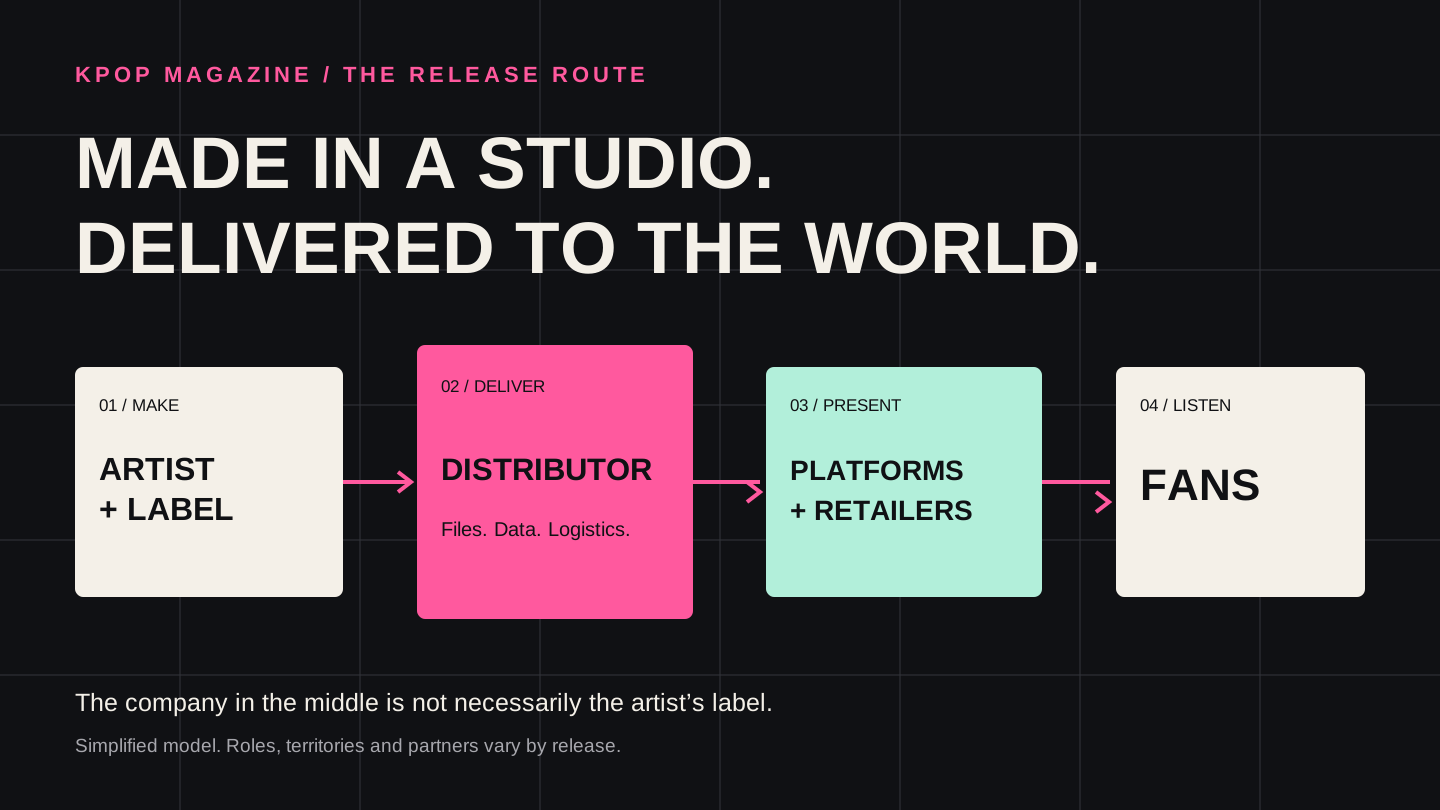
When a K-pop album arrives, fans usually notice the artist and the entertainment company. Behind the release, however, there may be another business connecting the finished music to streaming services, shops and listeners.
That business is the distributor. Understanding its role explains why a record can carry several company names—and why the artist’s agency is not always the company delivering the music.
The label and the distributor do different jobs
A label may organize recording, promotion and an artist’s wider career. Distribution deals concern how the release reaches the market. The responsibilities can overlap, but the names are not interchangeable.
Label / agency
- Artist development and A&R
- Recording and release planning
- Visual identity and promotion
Distributor
- Platform delivery and release data
- Sales reporting and settlement
- Physical supply where contracted
Spotify’s provider directory describes distributors as businesses that handle licensing and delivery to streaming services and pay the royalties earned through listening. That is a different role from owning the streaming service itself.
Two companies behind the releases
Kakao Entertainment and YG PLUS are useful examples of the infrastructure behind K-pop. This is not an exhaustive directory or a ranking. Neither company distributes every K-pop release.
More than a delivery business
Kakao combines music distribution with a multi-label business, Melon and the 1theK content network. Those are connected businesses, but artist management, distribution and streaming remain different functions.
Company-reported figure; page checked October 1, 2026. Not a market-share figure.The name does not define the roster
YG PLUS names YG Entertainment, HYBE, THEBLACKLABEL and VLAST among its partners. Its business includes digital and physical distribution, music investment and the independent-artist service mixtape.
Company-reported figure; page checked October 1, 2026. Labels and tracks are different measures.Why would HYBE work with YG PLUS?
In May 2026, YG PLUS renewed its agreement to distribute HYBE’s domestic album and digital music content, according to Music Business Worldwide’s report on the announcement. YG PLUS also lists HYBE in its official partner overview.
The important word is domestic. That agreement should not be read as proof that one company handles every HYBE artist’s release in every territory.
The broader lesson is straightforward: building artists and operating a distribution network are different capabilities. A label can work with a specialist for delivery and logistics while retaining its own creative organization.
music contentYG PLUS
distribution
A distributor relationship does not make the distributor the artist’s management company.
A finished audio file is only the beginning
A release needs more than sound. Spotify’s release guidance calls for audio files, artwork and metadata such as the title, credits and release date. Information about identifiers and availability also travels through the delivery chain.
DDEX’s Electronic Release Notification standard describes how businesses exchange release information, including when, where and how a service may make a release available.
Six things that travel with the song
Simplified checklist. Delivery specifications vary by distributor and platform.
Metadata is not decorative paperwork. It controls how a release appears. Spotify says it displays music as delivered; a label or distributor must send corrected information when something is wrong. An inaccurate artist name or credit can become a listener-facing problem.
Files and boxes are different supply chains
Digital delivery moves audio and data. Physical distribution moves objects. A photobook edition, a CD package and a limited version bring inventory, storage and shipping into the release plan.

.jpg)
Master → Metadata → Platform
The key questions are whether the correct files and credits arrive, and whether the release is available in the intended territories at the intended time.
Stock → Warehouse → Retailer
The key questions include which edition is in stock, where it is stored and how it reaches the shop or customer. Manufacturing and fulfillment duties depend on the deal.
YG PLUS’s business history records the establishment of an Incheon fulfillment center in May 2024 and expanded music-IP logistics services later that year. Its distribution work is not confined to uploading audio.
The route changes across borders
There is no single worldwide shopfront. In October 2024, Kakao announced a NetEase Cloud Music partnership covering music availability and promotional collaboration in China. Local platform relationships are part of what global distribution means in practice.
It is therefore more useful to ask who distributes a particular release, in a particular territory and format, than to assign every artist one permanent worldwide distributor.
Can independent artists use this system?
They can access digital distribution without a traditional agency. Spotify’s directory includes services for artists as well as providers serving labels. YG PLUS describes mixtape. as a distribution service for independent artists.
Access does not guarantee attention. Delivery places a recording where someone can find it; promotion and an audience give people a reason to listen. That distinction matters when asking whether an independent artist can build a sustainable career.
Read the small print
Next time you look at an album’s credits or product listing, separate the artist’s agency from the companies credited for production, distribution and retail. One release may involve several businesses without any of them doing the same job.
The studio creates the finished recording. The release system connects that recording to a market. And—as with the different rooms involved in recording K-pop—the work rarely belongs to one company alone.
Distribution turns it into a release.
Reporting checked October 1, 2026. Company figures are attributed claims, not independently audited market rankings. Diagrams are simplified editorial explanations, not exact contractual maps. Original graphics: KPOP MAGAZINE. Company names are editorial references, not logos or endorsements.