How Double Tracking Shapes a Vocal
A second take can add weight to a hook. An exact copy, an artificial double and a harmony do different jobs. Here is how to hear—and choose—the difference.
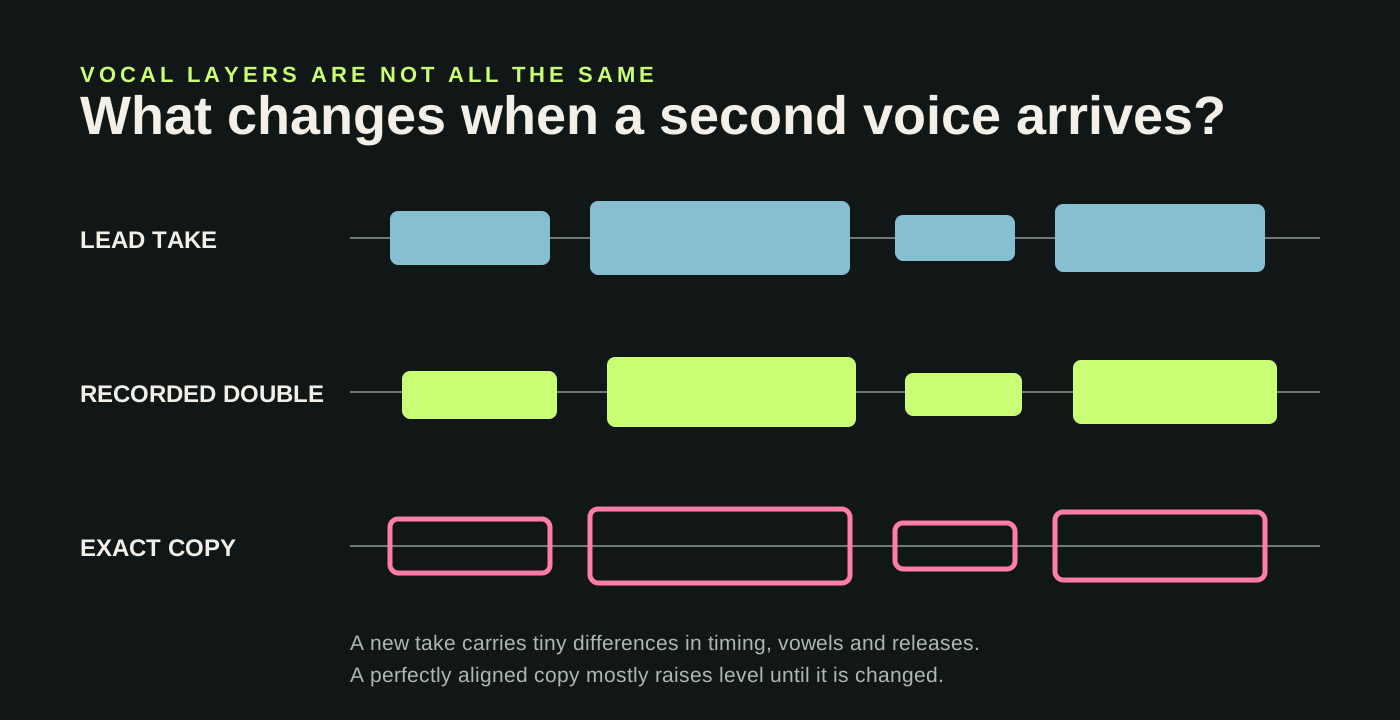
A thick vocal does not tell you how it was made. The singer may have performed the line twice. An engineer may have processed one take into an artificial double. A harmony may be carrying a different note. Those options can all make a chorus feel larger, but they do not create the same musical result.
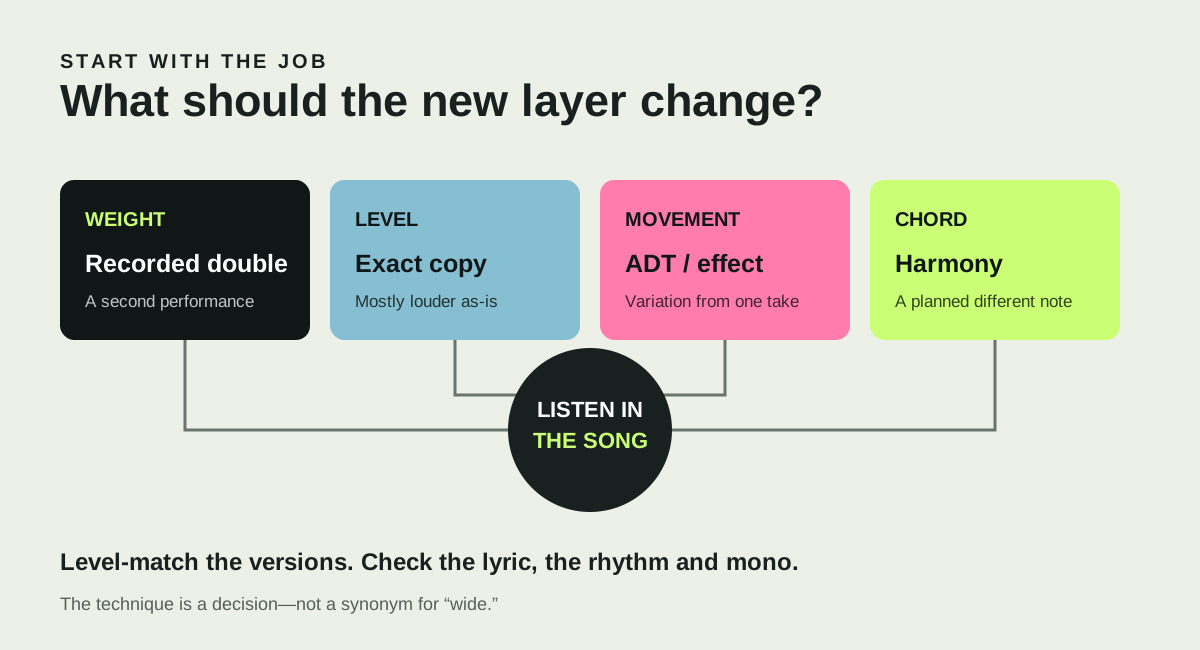
The useful question is not simply, “How do I make this wider?” It is, “What should the second layer change?”
Another take—or just another copy?
In recorded double tracking, the singer performs the same part again and closely matches the lead’s pitch and phrasing. The two takes are related, not identical. Small differences in consonants, vowel shapes, timing and releases create the extra density. iZotope’s guide describes the technique as recording a part twice and emphasizes tight matching.
An exact digital copy begins with none of that variation. If it remains perfectly aligned, uses the same routing and keeps the same polarity, it mainly makes the signal louder. Panning identical copies left and right does not turn them into two independent performances.
A second file is not automatically a second performance.
This matters at the front of a word. A loose double can make a consonant strike twice or expose two breaths. That may be expressive in a relaxed section; in a tight pop hook, it can blur the lyric. Editing is not only about technical neatness. It decides how clearly the phrase lands.
| Layer | What creates it | First listening question |
|---|---|---|
| Recorded double | A new performance of the same melody | Does it add weight without smearing the words? |
| Exact copy | The same recording duplicated and aligned | Is it doing anything beyond getting louder? |
| ADT / doubling effect | A processed variation derived from one take | Does the movement support or distract from the lead? |
| Harmony | A planned different note against the melody | Does it clarify the chord and emotional turn? |
Width can disappear in mono
Moving a copy a few milliseconds later can create apparent width. It also creates a new relationship between nearly identical signals. When the channels are combined, some frequencies may reinforce while others cancel, producing the hollow coloration known as comb filtering. iZotope’s mono-and-stereo guide demonstrates why a delayed duplicate deserves a mono check.
A genuinely re-recorded double also changes when collapsed, but its natural differences are not the same as a fixed time-shifted copy. That is one reason “duplicate, delay and pan” should be treated as an effect—not as a substitute whose result can be assumed.
Harmony has another job
A double reinforces the existing melody. A harmony introduces another planned note and therefore changes the chord listeners perceive. One economical arrangement is to leave most of the phrase single, add harmony only to its final sustained word, and let the following line return to one voice. The entry becomes an event rather than a constant texture.
Check the harmony against the actual chord, not only against the lead in isolation. A note that sounds attractive alone can pull the song toward a different harmonic color once the instrumental returns.
What artificial double tracking changes
Artificial double tracking, or ADT, was developed at Abbey Road by technician Ken Townsend during the Beatles era. Abbey Road’s own studio history identifies Townsend as its creator. The tape-era system used another machine and variable timing so the derived voice could move before or after the original.
Modern doubling effects can vary timing, pitch or stereo placement from a single performance. Apple’s modulation-effects documentation explains the broader principle: a delayed signal can be moved over time by a low-frequency oscillator, creating motion and depth. A chorus and an ADT-style treatment can overlap in ingredients without being identical in behavior or purpose.
The lesson is not that one method is the “real” one. A fresh performance provides independent human variation. A processor offers controllable movement when another take is unavailable or when a more obviously effected texture is the goal.
A three-pass test for one hook
Level-match the versions before judging them; louder often feels better even when the arrangement has not improved. Then listen for lyric clarity, groove and contrast. Remove one layer in the next section. The absence can make its return feel larger.
Most importantly, avoid reverse-engineering a released record from width alone. A thick vocal can come from performances, processing, ambience or combinations of them. Without session documentation, the exact method remains unknown.
For the earlier decision behind the session, read Before a Kpop Song Makes the Album. For the rooms and specialists after recording, see Where Are K-Pop Songs Actually Recorded?
Sources & scope
Checked October 12, 2026. This is an educational production explainer based on official studio and audio-developer documentation. It is not a hands-on product review, a listening test or a claim about a named artist’s vocal chain.
- iZotope: What Is Double Tracking? How to Do It Effectively in Vocal Recordings — definition, performance matching and selective use.
- iZotope: Double Tracking — 2 Basic Vocal Doubling Techniques — exact copies, timing/pitch variation and width.
- iZotope: Mono vs. Stereo in Audio Mixing — delayed duplicates, mono collapse and comb filtering.
- Abbey Road: A Brief History of the World’s Most Famous Recording Studios — Ken Townsend and ADT.
- Apple Logic Pro User Guide: Modulation effects overview — delay modulation principles.
- iZotope Vocal Doubler — official product description and demonstration context.
Visual credits
Timing map and vocal-layer decision map: original KPOP MAGAZINE explanatory graphics, created for this article; no third-party photography, product interface or recorded waveform reproduced. Official video: iZotope / YouTube, embedded under YouTube playback terms; footage remains with its rights holder. Playback availability depends on YouTube.