STYLE · FASHION AS IDENTITY
02 / THE PERSONAL SIGNATURE
How Jennie Made Fashion Part of Her Global Identity
From Chanel’s codes to her own off-duty styling, Jennie has built a fashion identity that works across K-pop, luxury and global pop culture.
READ THE STYLE ESSAY ↓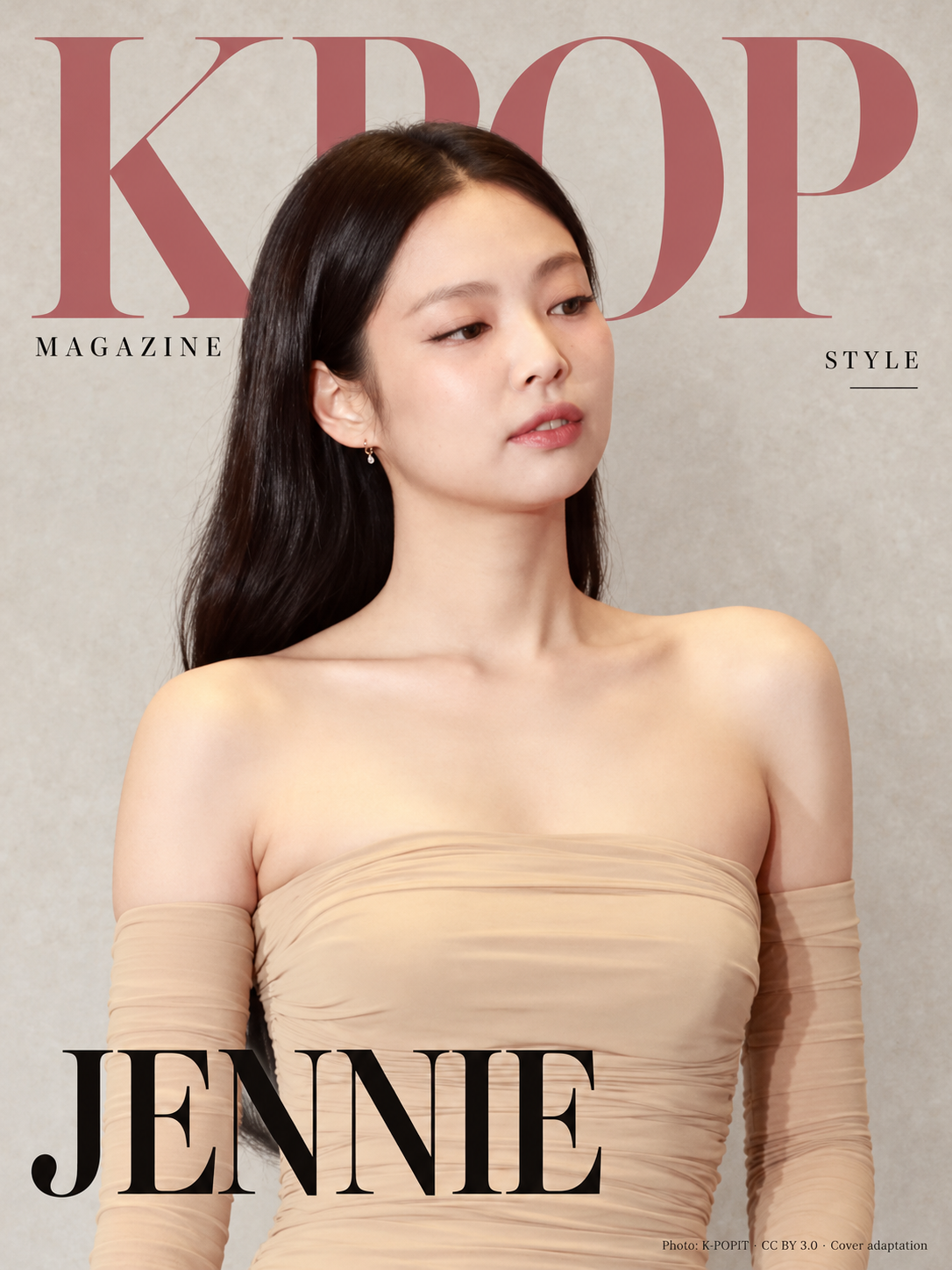
A GLOBAL SIGNATURE, ON HER OWN TERMS
There are artists who wear fashion well.
And then there are artists whose fashion becomes part of how the public understands them.
Jennie belongs to the second group.
For years, the BLACKPINK member has moved between K-pop stages, luxury fashion shows, global campaigns and her own solo work without treating those worlds as separate identities.
The clothes change.
The setting changes.
But the image remains recognizably hers.
That consistency may be the most important part of Jennie’s influence on fashion.
Jennie does not simply wear Chanel
Jennie’s relationship with Chanel has become one of the most visible connections between K-pop and a major luxury house.
Vogue’s 2025 Met Gala coverage identified Jennie as a Chanel ambassador and noted her appearance in the Chanel 25 bag campaign. [Source]
But longevity alone does not explain why the partnership works.
Jennie rarely appears as though she is simply reproducing a runway look exactly as it was shown.
She tends to reinterpret the codes.
Pearls may become playful rather than formal.
Tweed can feel youthful rather than traditional.
A classic Chanel silhouette can be paired with a sharper hairstyle, shorter proportions or a more contemporary attitude.
That ability to take a recognizable fashion language and make it feel personal is central to her image.
Her strongest looks balance elegance and disruption
Jennie’s fashion works because it rarely stays completely on one side.
She can look polished without becoming conservative.
She can look playful without losing sophistication.
She can wear something very feminine and still give it a sharper edge.
Speaking to Vogue around Chanel’s Spring 2025 show, Jennie explained that she likes taking elegant and feminine styles and giving them her own twist—sometimes making them funkier, cooler or more chic. [Source]
That description is useful because it explains much of her visual language.
Jennie’s style is rarely about rejecting classic fashion.
It is about slightly destabilizing it.
Familiar codes.
A personal twist.
THE FASHION HOUSE
Heritage.
Craft. Symbols.
Pearls, tweed and the contrast of black and white offer a recognizable starting point.
THE ARTIST
Proportion.
Attitude. Contrast.
A shorter silhouette, a change of hair or an unexpected accessory gives familiar styling a different energy.
The Met Gala showed how far that relationship has developed
At the 2025 Met Gala, Jennie wore a custom Chanel look built around black satin tailoring, pearls, a white camellia and a dramatic overskirt.
According to Vogue, the outfit took more than 330 hours to create and drew from Chanel designs of the 1920s and 1930s while reworking the idea of the men’s suit. [Source]
What made the look effective was not simply the craftsmanship.
It sat at the intersection of several versions of Jennie.
There was the Chanel ambassador.
The K-pop star.
The global celebrity.
And the performer who is comfortable using highly constructed fashion without disappearing inside it.
The clothing remained unmistakably Chanel.
But the person wearing it did not become secondary to the brand.
That balance is difficult to achieve
Luxury partnerships can easily overwhelm an artist’s own identity.
If every appearance becomes too closely tied to a fashion house, the celebrity can begin to look more like part of the campaign than an independent creative figure.
Jennie has largely avoided that problem.
Part of the reason is that her personal image exists outside Chanel.
Her airport looks, rehearsal clothing, casual layering, stage outfits and solo-era styling often move through different fashion languages.
Some looks are minimal.
Some are deliberately cute.
Others are sharp, glamorous or almost severe.
That range prevents one brand from becoming her entire visual identity.
Off-duty styling matters as much as red-carpet fashion
A major part of Jennie’s influence comes from the fact that audiences do not only see her in formal campaigns.
They also see how she dresses between performances, while traveling, backstage and in more casual settings.
That matters because fashion influence is often strongest when people can imagine adapting part of a look themselves.
A couture outfit may generate headlines.
A jacket, pair of sunglasses, knit top or hairstyle may generate imitation.
That is where celebrity fashion becomes culture rather than simply advertising.
Jennie understands visual repetition
Strong artist branding often depends on repetition.
Not identical outfits.
Repeated signals.
Jennie has used several of them over time:
- compact silhouettes
- bows and hair accessories
- pearls
- cropped proportions
- fitted tailoring
- contrasting black and white
- playful feminine details beside harder elements
- carefully controlled hair and makeup changes
None of those elements belongs exclusively to her.
But repeated together, they begin to create recognition.
That is how visual identity works.
It is not necessarily about inventing something no one has seen before.
It is about combining familiar things in a way people begin to associate with one person.
Different looks.
Repeated signals.
Fashion also changed with her solo identity
As Jennie’s solo career expanded, her styling also became less dependent on the visual framework of BLACKPINK.
That distinction is important.
Inside a group, styling has to create both individuality and cohesion.
A solo artist has more room to build an entire visual world around one person.
Jennie’s solo imagery has allowed her to move more freely between luxury fashion, performance wear, editorial styling and casual references.
The result is a broader identity.
She can still look like a BLACKPINK member.
But she no longer needs the group context to make the image immediately legible.
K-pop and luxury fashion now operate in the same visual economy
Jennie’s career also reflects a larger shift.
K-pop idols are no longer simply guests at fashion shows.
They sit in front rows, lead global campaigns, appear in major fashion editorials and increasingly become part of how luxury brands communicate with younger international audiences.
The relationship works in both directions.
Luxury houses gain cultural reach.
Artists gain another visual platform.
But the strongest partnerships do something more.
They create a shared language.
Jennie and Chanel are a clear example.
The brand contributes history, symbols and craftsmanship.
Jennie contributes contemporary cultural relevance and a personal styling logic that makes those codes feel different.
Her influence comes from control, not excess
It would be easy to describe Jennie’s fashion influence simply in terms of expensive clothes or major campaigns.
But that misses the more interesting point.
Her image usually feels controlled.
The proportions are considered.
The styling rarely appears accidental.
Even when the look seems casual, there is often a clear visual decision behind it.
That sense of control is one reason her style photographs so well.
It also explains why radically different outfits can still feel connected.
Fashion became part of the artist
The most successful artist styling eventually stops feeling like styling.
It becomes part of the person’s public identity.
That is where Jennie is now.
Chanel is part of that story.
So are stage clothes.
So are street-style moments.
So are hair, makeup, accessories and the way she moves between highly polished luxury imagery and much simpler looks.
None of those things alone defines her.
Together, they form a recognizable visual language.
And that may be Jennie’s real fashion strength:
she does not simply enter fashion’s world. She makes fashion fit into her own.